Im not sure what a 'system-mate' is, but I'm pretty sure they are talking about one/more of their alter personalities.
I'm surprised ecstasy had this kind of effect - I expected there to be a more like schizophrenic effect.
Drugs enhance things around you and seem to activate different parts of your brain, which could be both negative and positive for someone with D.I.D
This girls description makes the experience sound really fun and warming, but I can imagine someone will more aggressive and scary personalities probably wouldn't experience the same thing.
Imagine having a bad trip with D.I.D - could drugs make a person more paranoid?, or make their personalities 'turn' against them? I can't think anything worse to do with serious mental health problems than to take illegal drugs, especially trips!! (hallucinogenics) not that ecstasy is but still... scary.
Alex, A five year old boy who loves shooting toy guns.
William, A six year old boy who loves the Mr. Men.
Adam, A lovable ten year old boy who is not allowed to play outside.
Brenda, An outspoken, feisty 13 year old girl
Karl, A sixteen year old boy with an attitude and a temper.
Jamie
Elizabeth
Helen will switch from her self personality to one of the alter personalities at a moment’s notice and have no recollection of the time spent in the other personality. Under the personalities of Karl and Brenda, Helen would drink and take drugs. She became an alcoholic and overdosed over 100 times. She has since recovered from the alcoholism and the overdoses, were clearly not fatal.
THE PHINEAS AND FERB THEORY (http://anitasnotebook.com/2013/11/phineas-and-ferb-the-true-story-and-dark-theory-behind-the-show.html)
'The Phineas And Ferb Theory says that (like Angelica in The Rugrats Theory) the real Candace has lost her mind due to bad things happening in her life.
The theory says that Phineas was her little brother and he was bullied a lot in school because the other kids thought he was too nerdy. One day a bully punched Phineas in the head really hard and it killed him.
That day changed Candace forever.
Candace couldn’t deal with Phineas’ death so she built an imaginary world where he was still alive and playing with her other brother Ferb. Ferb has a disability and can’t talk or do much, but she imagines him and Phineas going on great adventures together.
The real reason why her mother can’t see the things that Phineas and Ferb build is that, well, they simply aren’t there. And the more Candace tries to convince her mother the more crazy she becomes.
The villain of the show Dr. Doofenshmirtz is actually Candace’s psychologist who she’s been seeing twice a week. It started to put a strain on the family to try and pay for all these expensive doctor visits though. In desperation her mother had an idea to write down all the fantastical stories Candace was telling her and try to sell it to Disney as a show, and it worked.'
I've seen and heard loads of different theories about Disney shows having underlined messages about mental health, for example apparently in Winnie the Pooh each character represents a different mental issues:
Winnie the Pooh: He has an eating disorder, and perhaps attention deficit disorder aka A.D.D where it is very hard to focus.
Piglet: It is believed that he suffers from Generalized Anxiety Disorder. The theory states that he may have suffered from an injury that crippled his self-esteem, and that his stuttering problem most likely developed from said injury.
Owl: Dyslexia and Short-Term Memory Loss. Even though he's shown as being exceptionally bright, it's shown that he has trouble reading. An example would be in Pooh's Grand Adventure when he mistook the word school for "skull." Also Owl tends to forget things as quickly as he says them.
Tigger: He suffers from Attention Deficit Hyperactivity Disorder. Tigger's always seen bouncing and can never stay in one place for a long period of time.
Kanga : Social Anxiety Disorder. She is very overprotective of her son, and she would never let her son make his own decisions because of her overprotectiveness.
Roo : Autism Spectrum Disorder. He lacks awareness of danger and has a strange attachment to sitting in his mother's pouch.
Rabbit: Rabbit suffers from Obsessive compulsive disorder (OCD). He is very orderly and obsessive, and the theory also questions his sexual orientation due to his feminine behavior.
Eeyore: Not surprisingly, he suffers from Depressive Disorder. He always has a bleak outlook on life, and never feels any positive emotions like happiness and excitement.
Christopher Robin: Lastly, Christopher Robin himself suffers from Schizophrenia.
http://fantheories.wikia.com/wiki/Winnie_the_Pooh
They are mostly fan fictions that are discussed in online forums but they could perhaps be true!!
After research i found that a lot of people with D.I.D have a child like personality, or a personality that is a lot younger than them. I really think one of our personalities should be a child.
Gaya has said that she is happy to be in our production, I'm going to ask her if she's available for some filming/ test shots at the end of the week.
PERSONALITY IDEAS
Child like
Depressed/medicated
?
I have an idea:
The frame will show the person as their child like personality- stood up, portrait. The person will be surrounded by stuffed animals/soft toys/ anything connoting to childhood. Perhaps they could even be wearing childrens clothes- lots of bright colours. I've got a headband that looks like butterfly wings I think that would be a perfect prop and a bright pink dolphin soft toy. (see below) They could have their hair in pony tails, a dummy even?
I would like the child like one to be very vibrant- lots of nice colours, happy expressions.
Theres a girl from America who actually lives her life as a baby- she dresses up as one, acts like one etc. She uses it as a coping mechanism for sexual abuse in the past.
We also discussed another personality being medicated/depressed to show the more dark side of D.I.D. Use fake meds as props- maybe hospital gown sort of outfit? dark makeup, pale face, messy hair.
AUDIO IDEAS:
Start with soft, child like giggling- eventually getting darker as the personalities progress from positive to negative- turns to screams or cries
A person dealing with DID/MPD can have anywhere from 2 to over 100 personalities inside them, with the average being 10. In most cases the person with D.I.D has experienced trauma in their younger years. Another thing about id, ego and super ego is it exists in the mind, not in the fabric of the brain. Meaning there are no links to the nervous system in the "Me, Myself & I" construct of Id, Ego and Super-Ego; whereas in DID/MPD there are actual alterations to the biology of the brain and body between personalities, meaning linguistic skills, learning patterns, chemistry, mental and emotional development, facial structure (sometimes). It's not uncommon for personalities to have allergies, food intolerance, pain levels (very common), etc., that the others do not share.
D.I.D personalities can have their own biological differences, whereas Id,ego & superego only exist in the mind. Id-the impulsive, child-like portion of the psyche that operates on the "pleasure principle" and only takes into account what it wants and disregards all consequences. Id is equivalent to the devil sitting on one's shoulder.
Super-Ego-plays the critical and moralizing role in the psyche, aims for perfection, includes ego's ideals, punishes misbehavior with feelings of guilt. Super-ego is equivalent to the angel on one's shoulder.
Ego- the organized, realistic portion on the psyche that acts according to the "reality principle" and seeks to please the id’s drive in realistic ways that will benefit in the long term rather than bringing grief. Ego is equivalent to one's conscience.
http://just-call-me-frank.blogspot.co.uk/2012/04/peek-into-id-ego-and-super-ego.html
After discussion today, my group and I have decided that the pieces of material we are projecting onto are now going to be portrait instead of landscape. This will help portray the whole body of each personality rather than just the head/shoulders. When we agreed this I immediately thought of Bill Viola's piece Martyrs. Instead of the people being 'attacked' by the elements, for our piece our subject could be attacked by their other personalities.
I like the idea of one of the personalities being quite psychotic/angry. The actor could be screaming/ acting very irrationally - throwing their arms around or pulling their hair. Another personality could be a more depressed/defeated one - falling to their knees, giving up.
A common personality in people with D.I.D is a child like figure - perhaps we could portray that? I'm not sure how i feel like we'd need props.
I found some artwork online based on Id, ego and superego. They were surprisingly all very similar.
I think because we are representing these 3 elements of the psyche we should take inspiration from these images. It looks as if the ID is the 'main' personality and the other 2 take more of a back seat.
I particularly like the first image, I like how the Id almost looks like a monster, the ego the angle or peace maker and the ego alien like. Its a nice representation of each and makes the stand out from each other. Its a very futuristic approach, which is quiet different to the usual.
This image feels a lot more like she has an angel and a devil on her shoulders, especially with the colour scheme. I like it but it seems a bit too obvious or basic.
I also like the bottom image but I feel its more representing live and death rather than our psyche.
Perhaps Freud's single most enduring and important idea was that the human psyche (personality) has more than one aspect. Freud (1923) saw the psyche structured into three parts (i.e. tripartite), the id, ego and superego, all developing at different stages in our lives.
These are systems, not parts of the brain, or in any way physical.
Although each part of the personality comprises unique features, they interact to form a whole, and each part makes a relative contribution to an individual's behaviour.
THE ID
The id is the primitive and instinctive component of personality. It consists of all the inherited (i.e. biological) components of personality present at birth, including the sex (life) instinct – Eros (which contains the libido), and the aggressive (death) instinct - Thanatos.
The id is the impulsive (and unconscious) part of our psyche which responds directly and immediately to the instincts.
The personality of the newborn child is all id and only later does it develop an ego and super-ego.
THE EGO
The ego is 'that part of the id which has been modified by the direct influence of the external world.'
The ego develops in order to mediate between the unrealistic id and the external real world. It is the decision making component of personality. Ideally the ego works by reason, whereas the id is chaotic and totally unreasonable.
The ego operates according to the reality principle, working out realistic ways of satisfying the id’s demands, often compromising or postponing satisfaction to avoid negative consequences of society. The ego considers social realities and norms, etiquette and rules in deciding how to behave.
Like the id, the ego seeks pleasure (i.e. tension reduction) and avoids pain, but unlike the id the ego is concerned with devising a realistic strategy to obtain pleasure. The ego has no concept of right or wrong; something is good simply if it achieves its end of satisfying without causing harm to itself or to the id.
THE SUPEREGO
The superego incorporates the values and morals of society which are learned from one's parents and others. It develops around the age of 3 – 5 during the phallic stage of psychosexual development.
The superego's function is to control the id's impulses, especially those which society forbids, such as sex and aggression. It also has the function of persuading the ego to turn to moralistic goals rather than simply realistic ones and to strive for perfection.
The superego consists of two systems: The conscience and the ideal self. The conscience can punish the ego through causing feelings of guilt. For example, if the ego gives in to the id's demands, the superego may make the person feel bad through guilt.
The ideal self (or ego-ideal) is an imaginary picture of how you ought to be, and represents career aspirations, how to treat other people, and how to behave as a member of society.
Kim Noble is a woman who, from the age of 14 years, spent 20 years in and out of hospital until she made contact with Dr Valerie Sinason and Dr Rob Hale at the Tavistock and Portman Clinics. In 1995 she began therapy and was diagnosed with Dissociative Identity Disorder (originally named multiple personality disorder). D.I.D is a creative way to cope with unbearable pain. The main personality splits into several parts with dissociative or amnesic barriers between them. It used to be a controversial disorder but Kim has had extensive tests over 2 years by leading psychology professor at UCL, John Morton, who has established there is no memory between the personalities and that she has the misfortune of representing the British gold standard over genuine dissociation.
Kim has 20 main personalities, many fragments and 14 of the main personalities are artists. Having no formal art training, 14 of the main alters became interested in painting in 2004 after spending a short time with an art therapist. These 14 artists each have their own distinctive style, colours and themes, ranging from solitary deserts, sea scenes and abstracts to collages and paintings with traumatic content. Many alters are unaware that they share a body with other artists.
Justin Bower
http://justinbower.com/ Justin Bower paints his subjects as de-stabilized, fractured post-humans in a nexus of interlocking spatial systems. His paintings problematize how we define ourselves in this digital and virtual age while suggesting the impossibility of grasping such a slippery notion. His paintings reflect the increasing “control society” that we find ourselves in. By placing his turbulent subjects in an Op Art context, the familiar repeating patterns that were used to engage the eye in the 60’s, are now being deployed to act as a type of “code” permeating and invading the body/subject. Bower wants to “have the viewer feel the instability his subjects reflect”, by playing on the non-fixed features of the face and the hallucinatory effects of the Op Art, so as to engage the viewer and perhaps awaken them from a techno-slumber. The Magician (6' x 5'), 2015 Interpolated State 1 (7' x 6'), 2015 I really like Justin Bowers work, I would be pretty interested in creating art similar to this. I really like his use of colour and the glithcyness. I also am fascinated by these pieces because I thought they were created on a computer but they are actually paintings. If I create a still images/ GIF I would like it to look something like this.
Hi i'm David Robert Jones, 8 2 85 (iamahumandoing)
Google your National Insurance number (UK) - including letters and spaces. This may work for other numbers I'm not sure, but I'm finding links everywhere. This may also work with your full name and date of birth. Look at what appears - a fountain of knowledge. Look for the patterns and things that connect you to what appears. Think of how this relates to the great thinkers of our time. Think of all the films we like to watch - guiding us. Look at how we've developed an idea of good and bad through this. Other stories - Lord of the Rings - Mordor is Mynydd Morvil in Wales. I reached this Eureka moment by linking the recent thread 'Shasta and Goliath' to maternal instincts of animals. In particular, Whales. They share a lot of characteristics with humans. Think Grandmother. So I made the connection, Whales and Wales. Then I thought Mountain (Mt. Shasta). So a quick check on the online Welsh/English translator, I came up with Mynydd Morvil.... Then I researched genealogy and legend in the local area. I found a rather large document that drew me in and seemed to tie in with my life in lots of ways. It was all rather odd. Then you must realise the paternal instincts. And meet your demons. Everything is a matter of perception - It could work either way. See the apple that fell on Isaac Newton's head for what it represented. When you look at it in the right way - Everything is ironic.... It was all a learning process. The pot of gold, as it were, is at the end of the rainbow (water touching the edge of your biosphere). Realise the maternal and paternal is opposite but part of the same trinity. Yin and Yang as it were make a whole. Don't forget - we all know how we'd like the World to be... You are the master of your own reality. Ultimately answerable to Divine Love, Intelligence, and Music... Retune to 528hz Solfeggio. See the power of the thirds, sixths and ninths...
The Constitution/Rules whatever you want to call them are invalid! Think of it as the Truman Show and you're Truman.
Listen to good music.... Mott the Hoople 'All the Young Dudes' is a good reflection of where we're at...
My namesake wrote it. David Robert Jones 8/1/47
The 'truth' isn't what you think it is - it is synchronous and fleeting. Learn to recognise the pattern of truth. All the bad things, and all the good things in the World that you see - they appear there just for you to see them and decode the information present. You can then recognise the bad, then work out good, then work out Yourself... See...Trinity.
33 degrees.
All the best,
iamahumanbeing
(my earlier threads/posts can be read for some background - But remember, it's not the gospel truth)
January 2011 - http://www.abovetopsecret.com/forum/thread653625/pg1
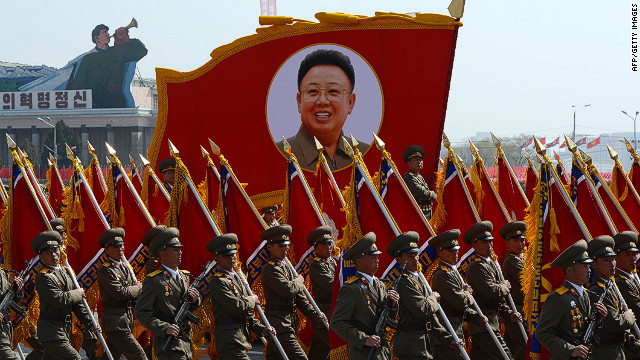
North Korea has officially announced it is blocking Facebook, YouTube, Twitter and South Korean websites in a bid to further control access to outside information. The new restrictions will make it more difficult for visitors or the small community of foreign residents in North Koreato post real-time informationabout the country to the outside world, and will further limit the ability of North Koreans with internet access to view information about their country posted elsewhere.
The government announcement named YouTube, Facebook, Twitter, Voice of America and South Korean media sites as specific examples of what it is blocking “for a certain period of time.”It also said gambling and “sex and adult websites” have been blocked. Facebook andTwitterhad been informally blocked for months and could not be accessed Friday in a web search from Pyongyang.
The announcement added that anyone who tries to hack onto such sites, access them in an “improper” way or distribute “anti-republic data” from them will be subject to punishment under North Korean law. It did not say what the punishment would be. The new North Korean restrictions aresimilar to censorship measures in neighbouring China, which allows more access in general but also maintains strict bans on sites that Beijing deems politically sensitive or harmful.
It is estimated that more than 2 million North Koreans now use mobile phones, but with few exceptions access to the internet is limited to officials, technicians or others who have special permission to use it, usually under close supervisionIn June last year, warnings began appearing on Instagram accounts in North Korea that claimed access to the popular photo-sharing app was being denied for “harmful content”. Access to other sites was also denied with a screen notification saying, “Warning! You can’t connect to this website because it’s in blacklist site.”
https://www.youtube.com/watch?v=OIhkklnA73Q
Existing Work
Photo Op - kennardphillipps kennardphillipps are Peter Kennard and Cat Picton-Phillipps who have worked together since 2002, initially to make art in response to the invasion of Iraq. Their work is shown in a range of contexts, on line, in galleries and on protest marches. They describe their work as an integral part of political activism, a direct means of communication: 'the visual arm of protest'. Photo Op, depicting Tony Blair taking a ‘selfie’ in front of a huge explosion, has become an iconic image. It was produced in response to the anger they felt at the Government’s decision to go to war in Iraq in 2003, in the face of widespread public protest. They describe their need to create something that reflected and validated this public opposition, sentiments they felt were not reflected in the mainstream media at the time.
http://www.iwm.org.uk/collections/item/object/42971